


Triangular Fibrocartilage Complex Injury
What is the triangular fibrocartilage complex?
The Triangular Fibrocartilage Complex (TFCC) is a three-dim that links the radius and ulnar with the small bones of the wrist. The TFCC provides stability for rotation/twisting of the forearm and acts as a cushion between the ulnar and smaller carpal bones.
What are the common types of TFCC tears?
There are two main groups of TFCC tears:
1. Traumatic TFCC tear
2. Degenerative TFCC tear
Traumatic (Type 1) TFCC tears
-
Can occur from a fall, a twisting injury or repetitive loading
-
An ulnar styloid fracture may also occur.
-
Usually occur in younger patients.
-
Central tears may occur from the TFCC being compressed between the ulnar head and the lunate (or triquetrum). This is more likely if the ulnar bone is relatively longer that the radius (ulnar positive variance). See ulno-carpal abutment.
Degenerative (Type 2) TFCC tears
-
Degenerative TFCC tears are a common finding in adults over 40 years as part of normal wear over time.
-
Degenerative TFCC tears may not be a cause of pain.
Traumatic (Type 1) TFCC Tears


How is a TFCC tear diagnosed?
History - how the injury occured & the symptoms
Examination - specific wrist examination tests
X-ray - may show a small fracture of the ulnar styloid or an ulnar bone that is relatively longer than the radius with small cysts in the lunate.
MRI scan is the most accurate diagnosing TFCC tears.
TFCC tears are extremely common and may not always cause pain. Correlation of the history, examination and MRI results is essential.
Image: Type 1 B (Traumatic) TFCC tear on MRI scan.

Treatment Options
Non-operative treatment
Many TFCC tears should first have a trial of non-operative treatment.
Non-operative treatment may include:
-
Wrist splints
-
TFCC rehabilitation physiotherapy program
-
Anti-inflammatory medication
-
Activity modification
-
Steroid injection
If the symptoms persist despite non-operative treatment and are interfering with function, operative treatment may be considered.
Operative treatment
TFCC injuries with marked pain and/or instability of the distal radio-ulnar joint often require surgical repair or, if longstanding, a reconstruction may be needed. The treatment involves repairing the TFCC to ulna bone using a suture anchor. This is performed under general anaesthetic as a day surgery procedure.


What is the Recovery?
Full recovery from a TFCC repair is usually 6-12 months. Most people will have returned to all their normal activities with minimal discomfort by 6 months. Normal function is the expected outcome.
2-weeks: Bandages are removed, a removable splint applied by the hand therapist and wrist exercises are commenced. No twisting activities.
6-8 weeks: Twisting/rotating exercises and graduated strengthening commenced.
3-4 months: Most light activities pain-free
6-12 months: Full recovery
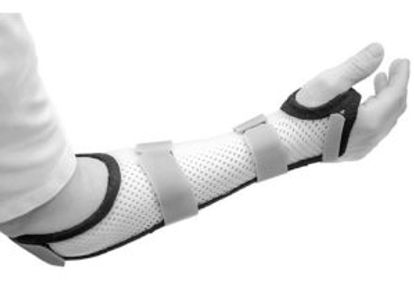
Muenster splint to limit rotation after TFCC repair.
What are the risks of surgery?
The most common issues include:
-
Wrist stiffness
-
Residual discomfort
-
Infection < 1%